
by Jukka Issakainen
Welcome to Grayskull Weekly! As presented exclusively here on He-Man.org – where we take a look at all things He-Man and the Masters of the Universe comics! From behind-the-scenes Interviews, Previews and more! You can find previous posts in these links:
- Grayskull Weekly #1 – Interview with writer Tiffany Smith
- Grayskull Weekly #2 – Review Masters of the Universe the Sword of Flaws #1
- Grayskull Weekly #3 – Review Masters of the Universe the Sword of Flaws #2
This week we have another exciting Interview for all you MOTU fans! Conducted by Jukka Issakainen.
Thank you very much Reilly for taking time from your busy schedule for this interview! Many MOTU fans first discovered your work through your fan art and, more recently, your contributions to the Origins mini-comics. For readers who may be new to you, could you share a bit about your background and what’s your connection to the world of Eternia?
Thanks for reaching out to chat, Jukka!
I’ve been a huge fan of He-Man going way, way back. When I was in kindergarten, Masters of the Universe was my favorite thing in the world! The comics that came with the toys back in the 80s were the first comics I ever read, before I even knew how to read, and were a big source of inspiration for making me want to learn how to draw at a young age. It’s been such a treat to get to work on those same exact comics now for the Origins line.
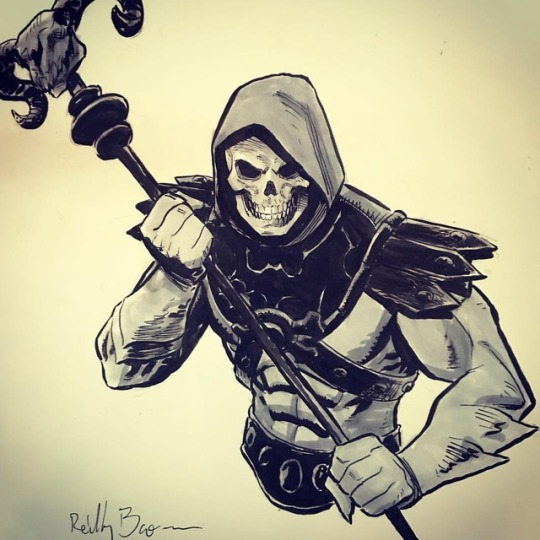
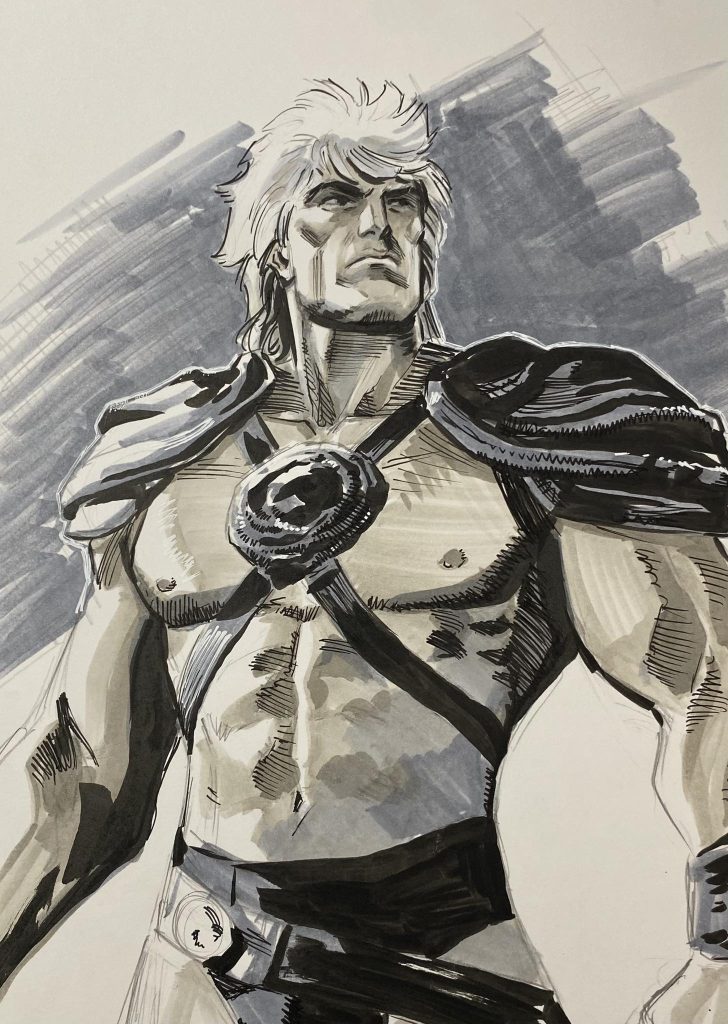

Selection of commissions and fan art. Skeletor, He-Man (Dolph Lundgren) and Zodac by Reilly Brown.
You’ve had a long and varied career in the comics industry. How did you originally break in, and what have been some of the major titles or publishers you’ve worked with over the years?
I studied illustration at Virginia Commonwealth University, where me and my friends would make our own small press comics. After graduating, I started going to a bunch of comic conventions to show off my portfolio and look for work, and in 2005 got my first published gig with Marvel comics for the 2005 Marvel Holiday Special.
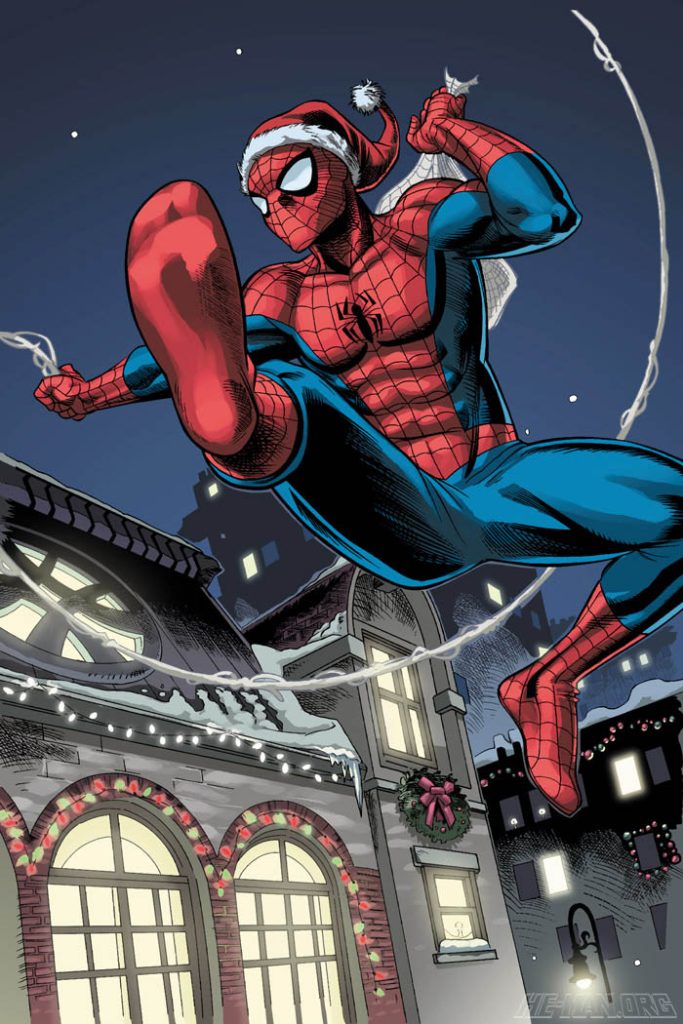
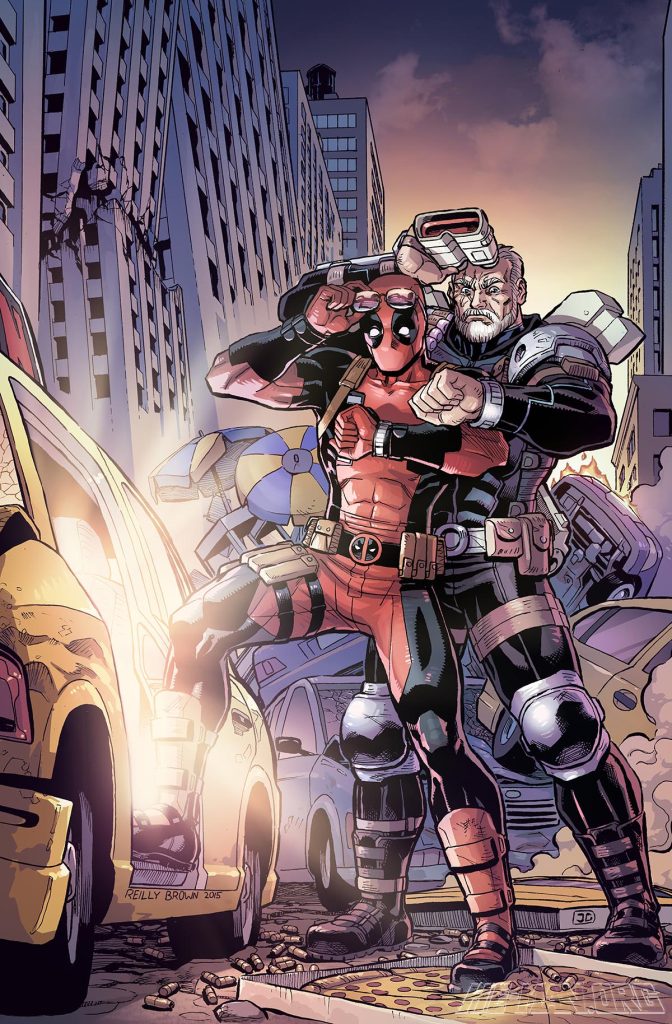
After that, I became the regular artist on the Cable & Deadpool series. At Marvel I worked on a wide variety of series, some of the highlights including Amazing Spider-Man, Incredible Hercules, and a bunch of other Deadpool titles.
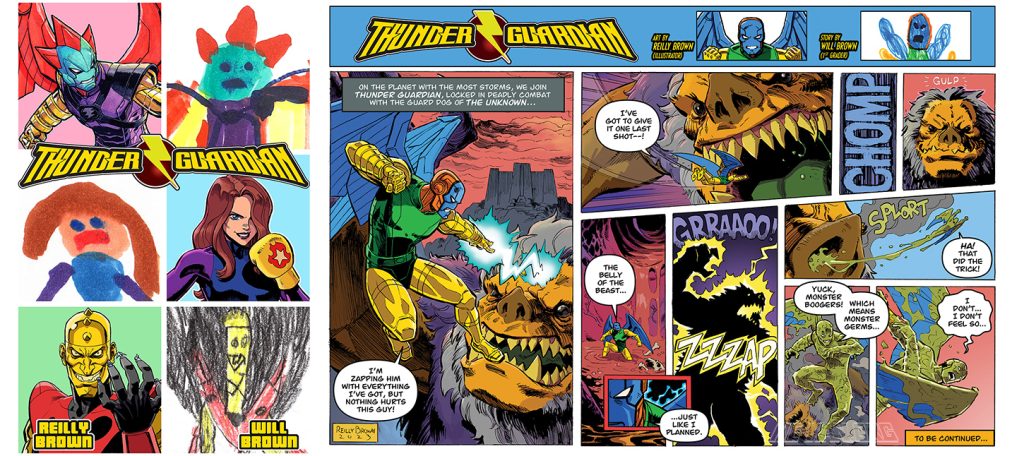
I’ve also worked on a few projects at DC, such as Batman/Fortnite: Zero Point, and done a few creator owned series, such as Outrage with Fabian Nicieza for Webtoon, and a comic strip that I currently do with my son called Thunder Guardian.
Looking back across your body of work, which ones were your favorites, and what made them special for you?
Man, it’s so hard to choose! Every comic I work on is like one of my babies, and I always put everything I have into my work, so it’s hard to pick favorites. That said, every time I get to work on Deadpool, I have a lot of fun. Particularly the Cable & Deadpool (and Deadpool & Cable) projects I’ve done with Fabian Nicieza, because I just love the way he has the two lead characters interact with each other. I also loved working on Deadpool: Dracula’s Gauntlet with Gerry Duggan and Brian Posehn, because we got to come up with this major new character, Shiklah, and I had a lot of freedom on that book to do some wild stuff with her and the Merc with a Mouth, including getting them married. That was a lot of fun.
The Incredible Hercules series with Fred Van Lente and Greg Pak was also great, because it was my first time really getting to draw a fantasy setting, which is a genre I’ve loved ever since playing with my Masters actions figures as a kid, and it was fun to play around with Greek and Norse mythology in the Marvel universe.
I also loved working on the Batman/Fortnite comic with Christos Gage and Donald Mustard. It was just a great story all around, but there was one issue in particular that was a lot of fun, where Batman fights Snake Eyes from GI Joe, that really made me feel like I was just a kid again playing with my action figures. So much fun!
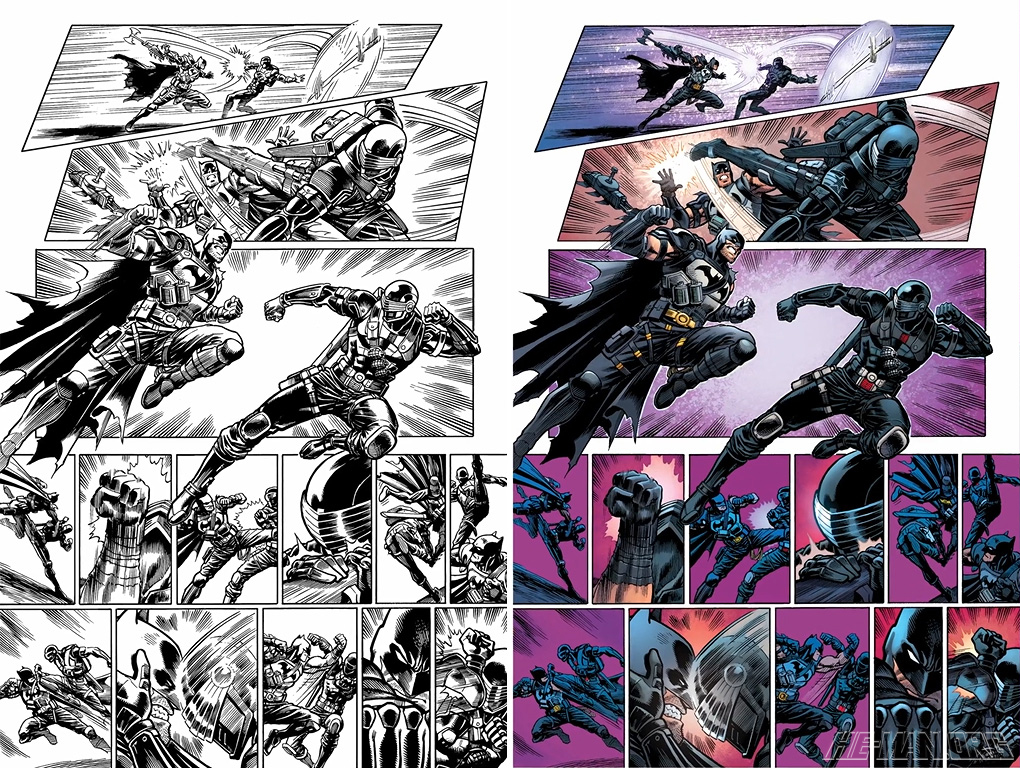
Comic page from “Batman/Fortnite: Zero Point” issue #3, where Batman fights against Snake Eyes. Black and white version and the colored version.
You’ve also worked as a writer on several comics. What was the transition like moving from being primarily an artist to taking on writing duties?
Honestly, it was a pretty natural transition. I would write my own comics back when I was first learning to make comics, so I knew how to do it, and when the opportunity arose, I was able to jump on it pretty easily. The first time I wrote my own story was at the end of the Cable & Deadpool series, where Fabian had taken on some kind of job for film or TV or something, and had to drop a project to make room in his schedule. Since our series was supposed to end in two issues anyway, that was the one that made the most sense.
The editor, Nicole Boose, was looking for a new writer for those last two issues, and I just threw my hat in the ring, since I was working on the series already, and knew where the story was and had a feeling of where it should naturally progress to.
Honestly, a lot of the comics I work on I collaborate pretty closely with the writer anyway, in classic “Marvel Style,” just like you’d see them describe in the back of old Stan Lee and Steve Ditko Amazing Spider-Man comic books, so even if I’m not credited as such, I’m usually pretty close to the writing process. That’s why on a lot of my books I’m credited as a “co-writer,” or “co-creator,” or whatever.
Regarding Masters of the Universe, how did the opportunity to illustrate the Origins mini-comics come about, and what has the experience been like so far?
I was at the Mattel booth at San Diego Comic Con, and just started talking to folks from Mattel. I was just telling the team how much I love Masters of the Universe and enjoyed the Origins line, and casually said, “Hey, if you need a comic artist for anything, keep me in mind.” Turns out they did, and about a week later I got an e-mail with a script for the Hurricane Hordak mini comic. One of the easiest job interviews I ever had!

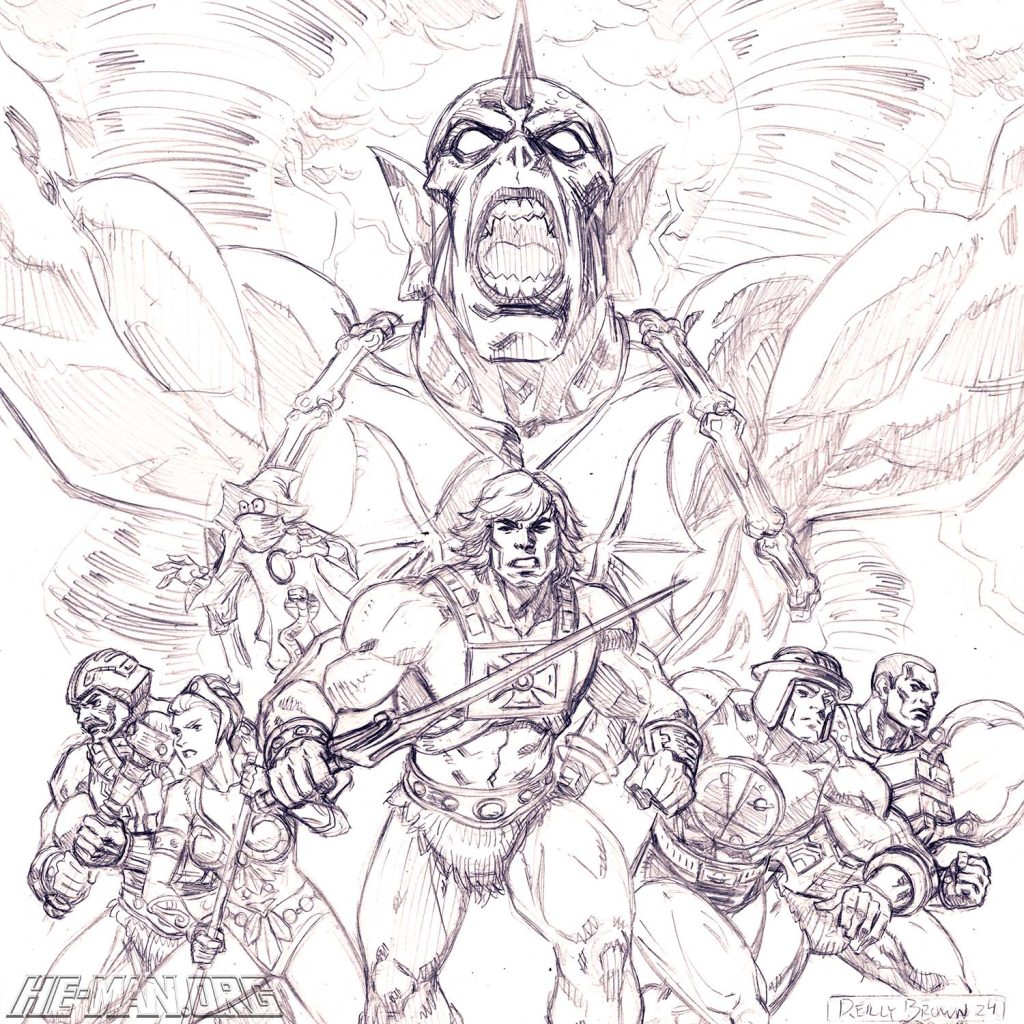
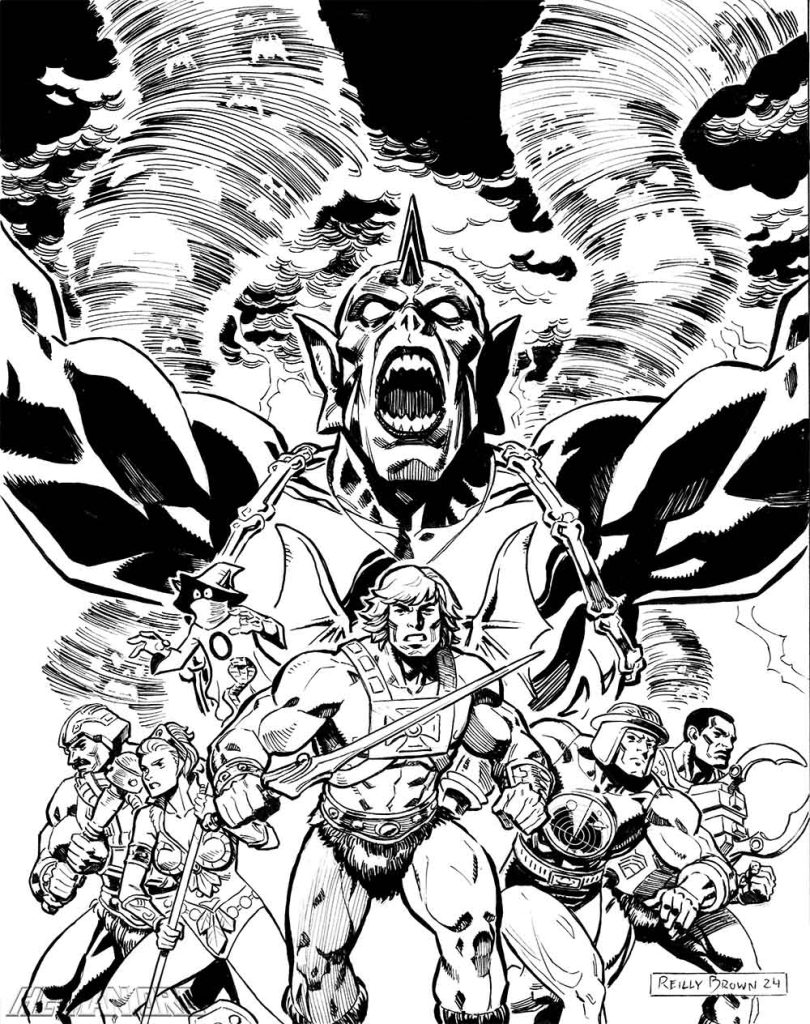
Cover process for Masters of the Universe Origins mini-comic (packaged with Hurricane Hordak) “Eye of the Storm” art – by Reilly Brown.
Since then, it’s been great. I really love working on those shorts. Josh Sky, the writer for the minis, really knows how to cram a whole story into six tiny pages, which is no easy task! And I really love being able to do complete stories in such a small space, it’s an interesting change of pace and a different challenge than the comics I usually do, where a single story can take several full-length issues.
Is there a certain amount of mini-comics in your contract, and have you completed those? Or can fans expect to see you working simultaneously on mini-comics and full-length MOTU comics moving forward?
I’m just doing them as they come. I’ve done a bunch of those minis at this point, and there could be more on the way! I’m currently working on them at the same time as the full-length Dark Horse comic. So far, I’m juggling them both pretty well.
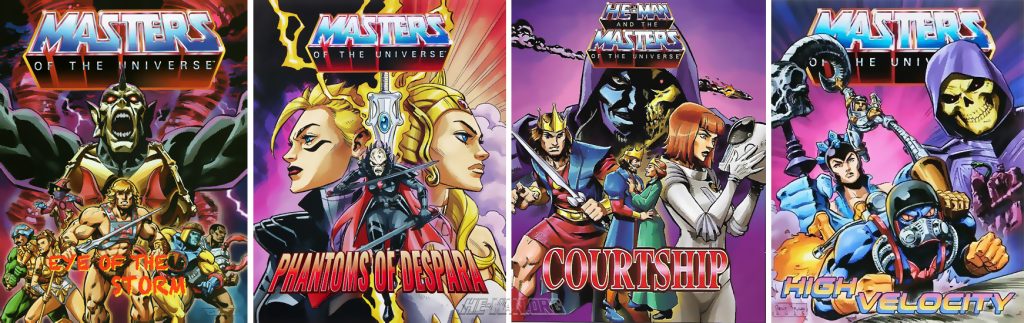
Select Masters of the Universe Origins mini-comics that Reilly has worked on (writer Josh Sky) – “Eye of the Storm”, “Phantoms of Despara”, “Courtship” and “High Velocity”.
Given the smaller page size and (6pg) count on mini-comics, versus a regular US comic with 22 pages, are there certain challenges and how do you approach them?
Oh yeah, totally. With the minis, I don’t have much space, so I really have to put thought into what goes in each panel, to make sure I have space for all the necessary information to tell the story, and give the readers a good look at the main characters, show the location, show where everyone is standing in relation to each other, etc, plus have room for the narration and dialog.
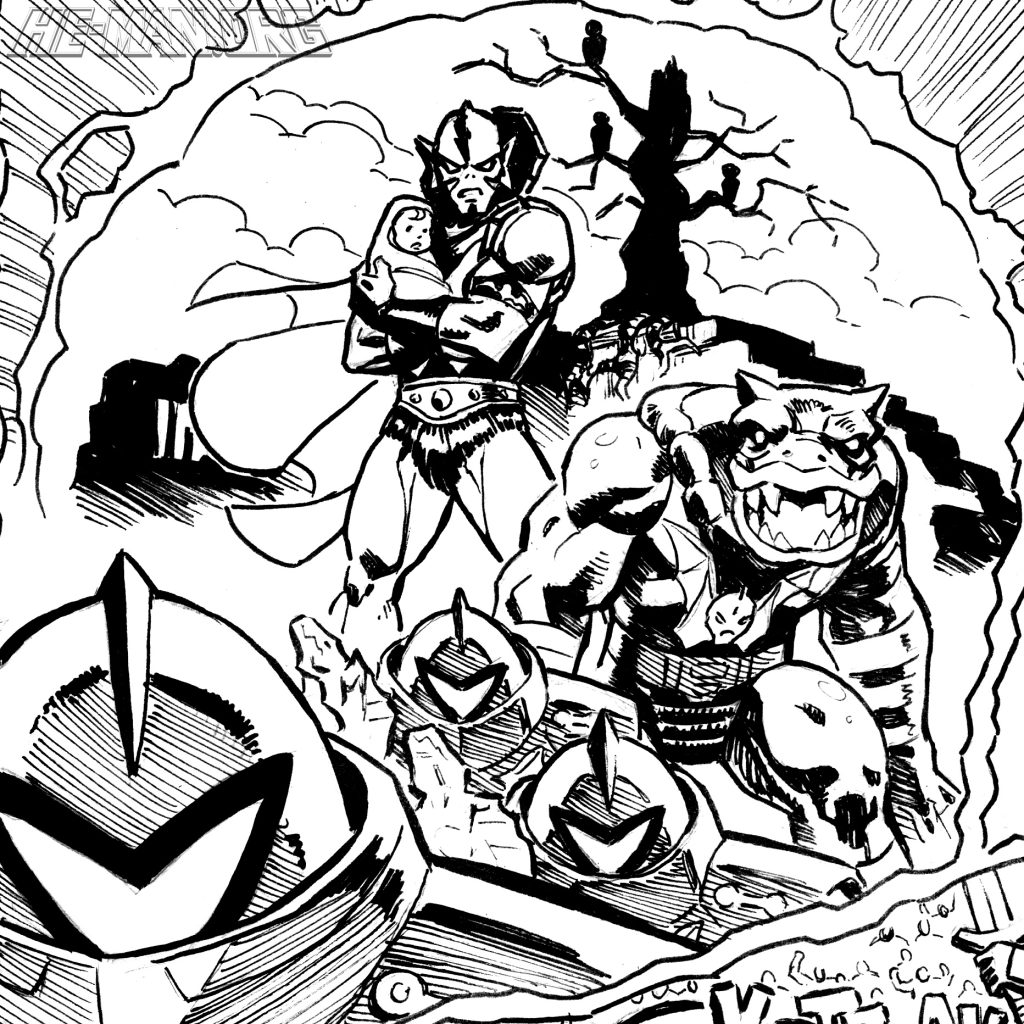
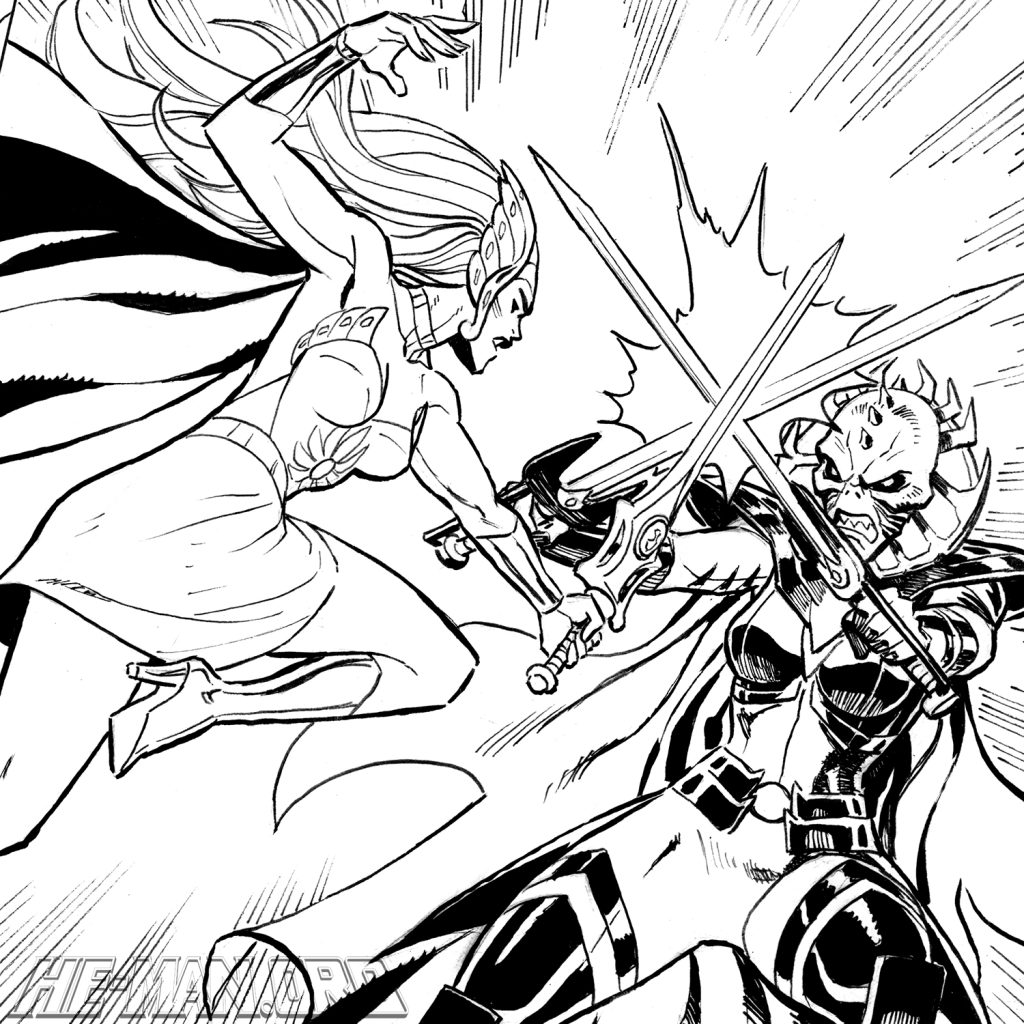
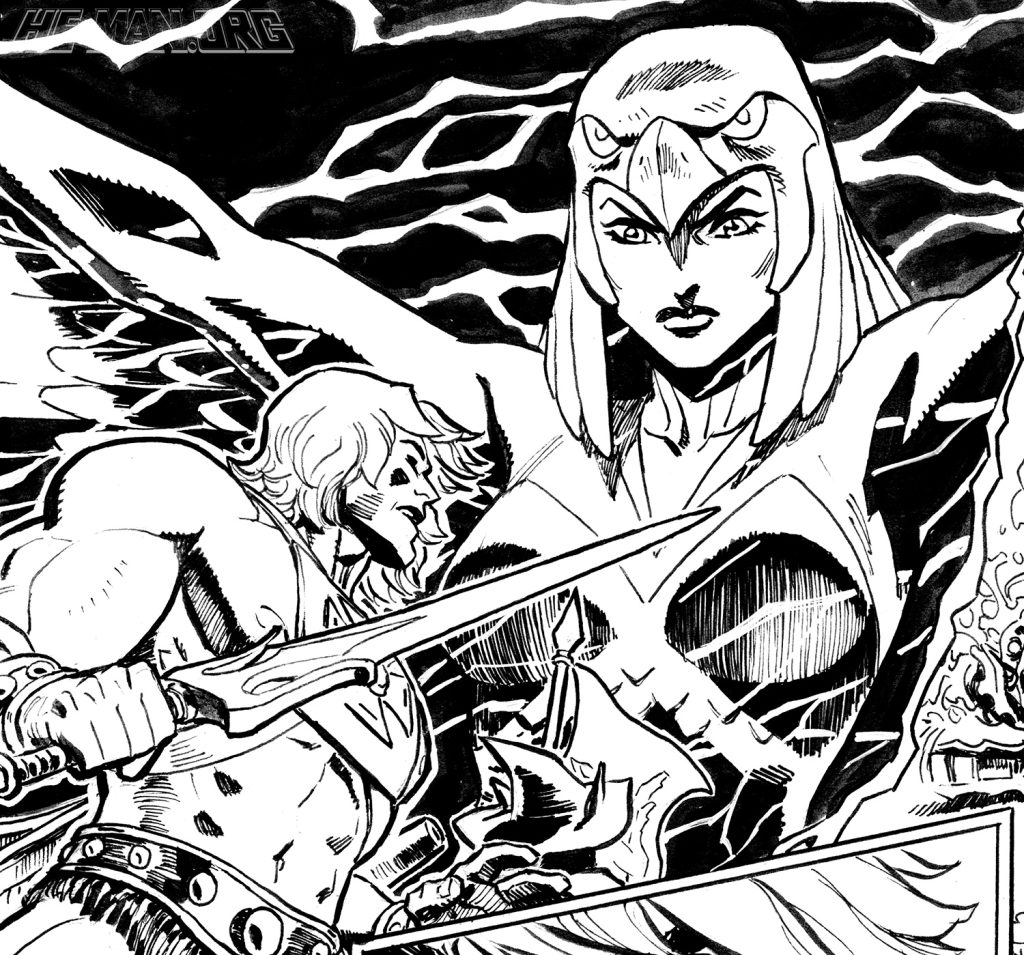
Then, hopefully I can still make space for a couple of panels to let the art show off a bit. If we do it right, each one will be succinct, but still pack a punch and be memorable for the fans.
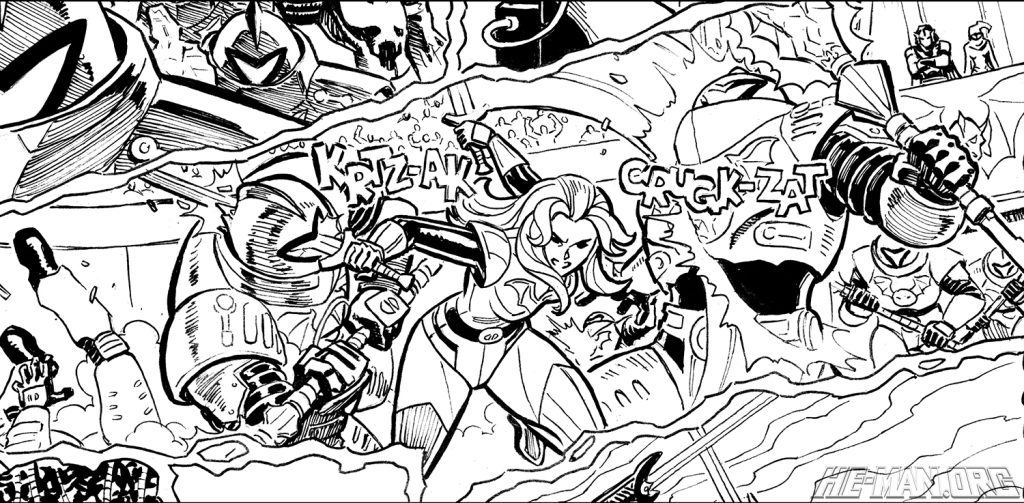
In the full-sized issues, we have more room to play, and can build up character relationships and drama, and have subplots that pay off as the story progresses, as well as do more play-by-play for the action scenes, which can lead to a lot of fun and exciting moments.
Only a handful of artists in MOTU’s printed history, such as Alfredo P. Alcala, Emiliano Santalucia, Axel Giménez, Daniel HDR and Freddie E. Williams II have contributed to sequential pages for both official mini-comics and full-sized comics. How does it feel to be part of that small group working across both formats?
It’s great to be among that number! Hopefully having me contribute to both formats with help the line have a more unified visual identity. Not that I’m the only artist working on them of course, but hopefully it will create a connection between the various comics.
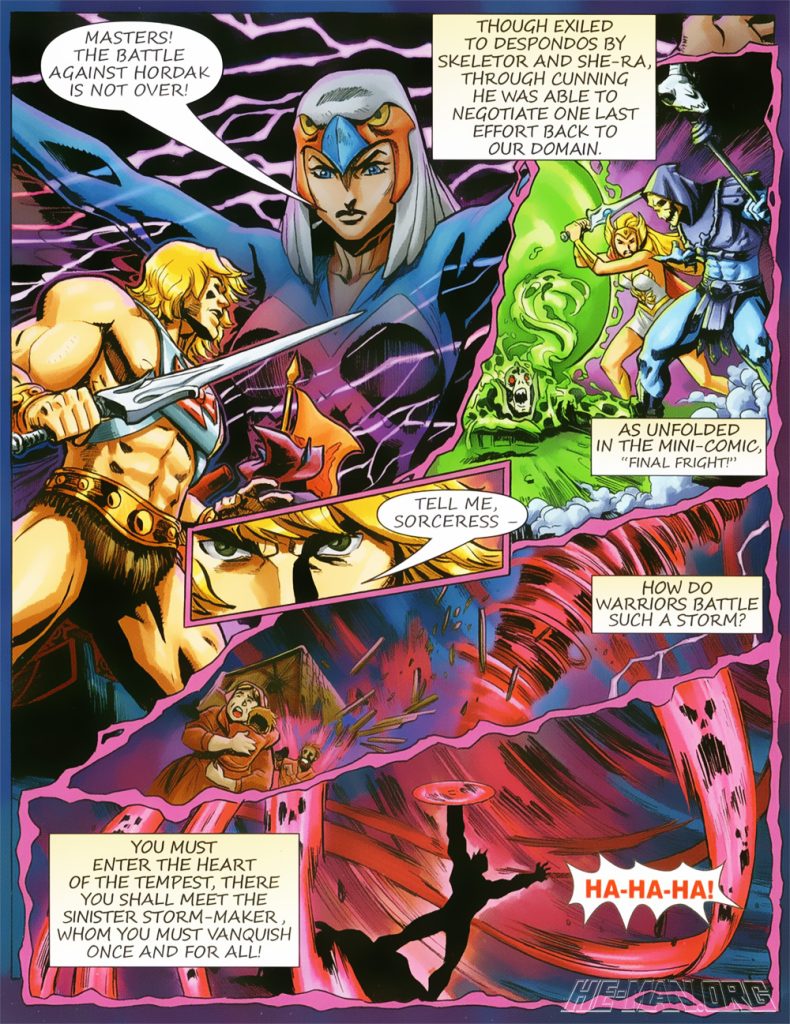
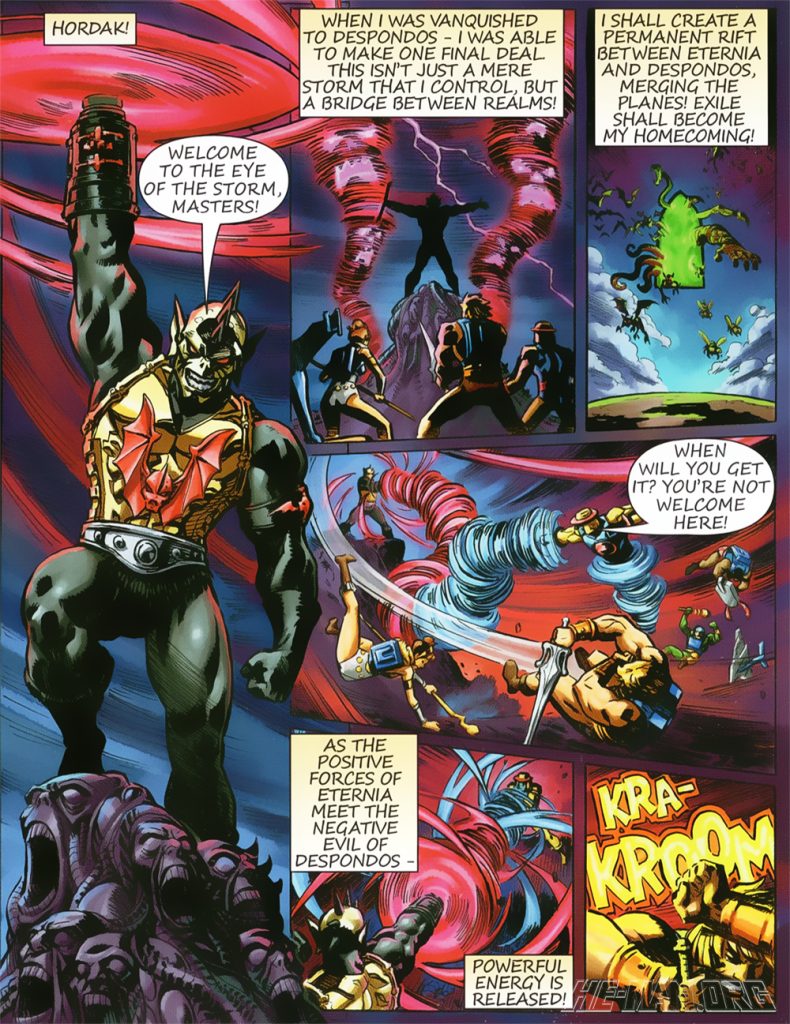
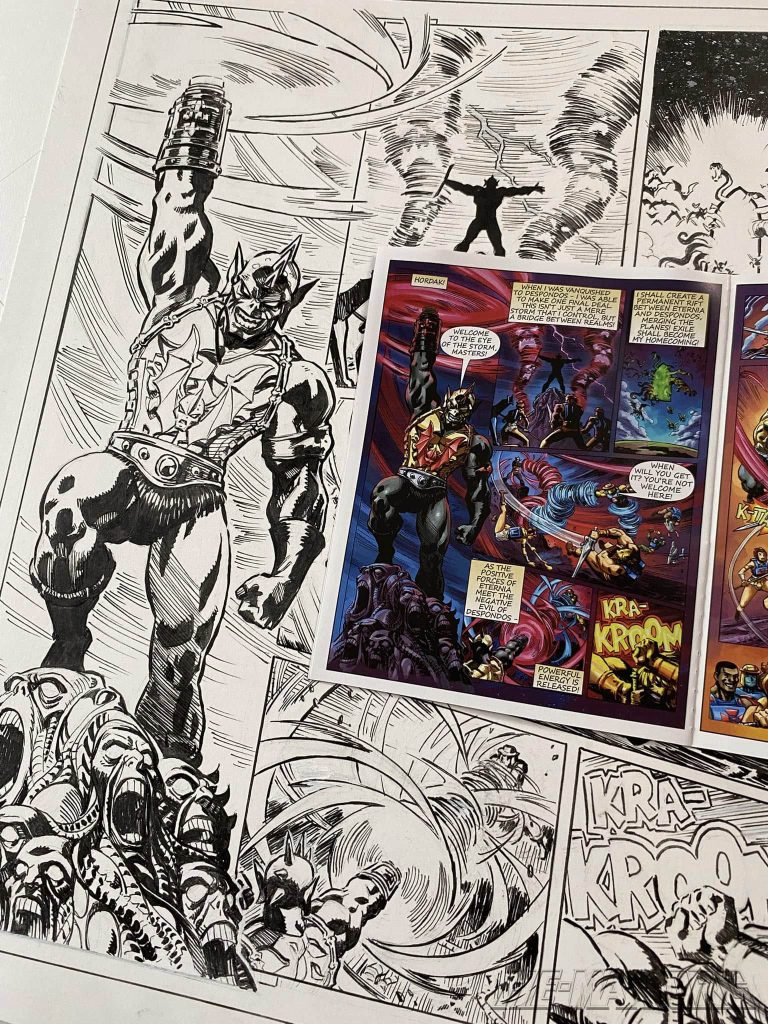
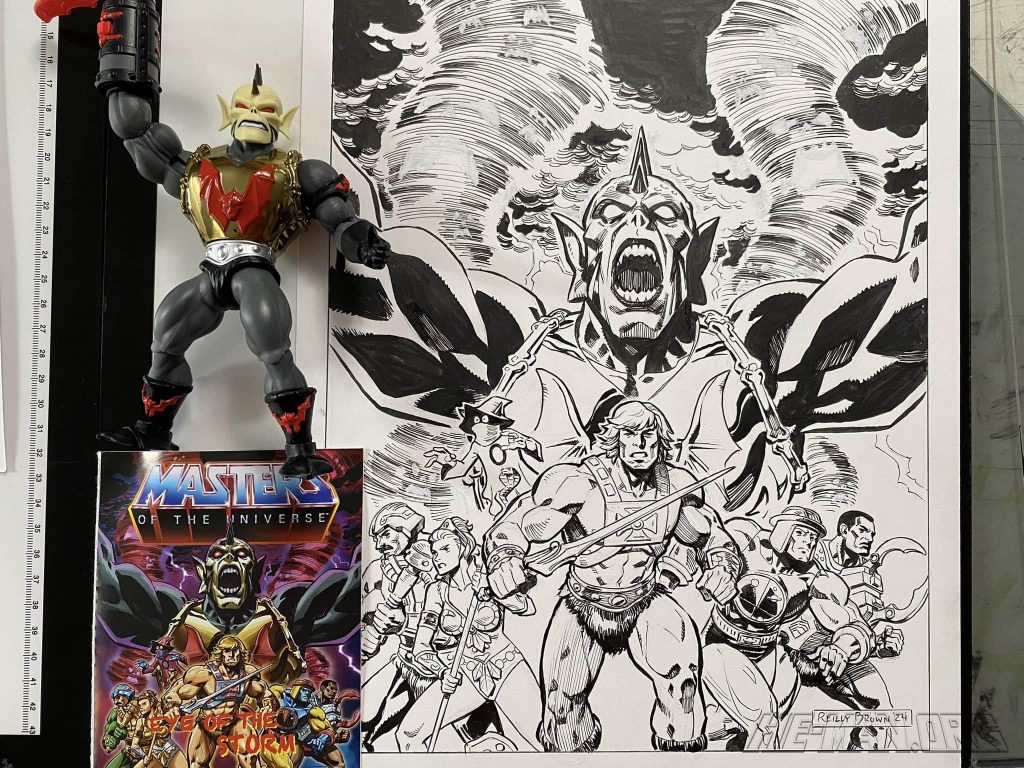
I see you’ve shared some photos of the illustrated inked comic page for Origins mini-comic, next to the final printed issue. Can you tell us about your tools and materials when working on the comics?
I draw these like I draw all my comics with pencil and ink on paper. And a lot of eraser dust.
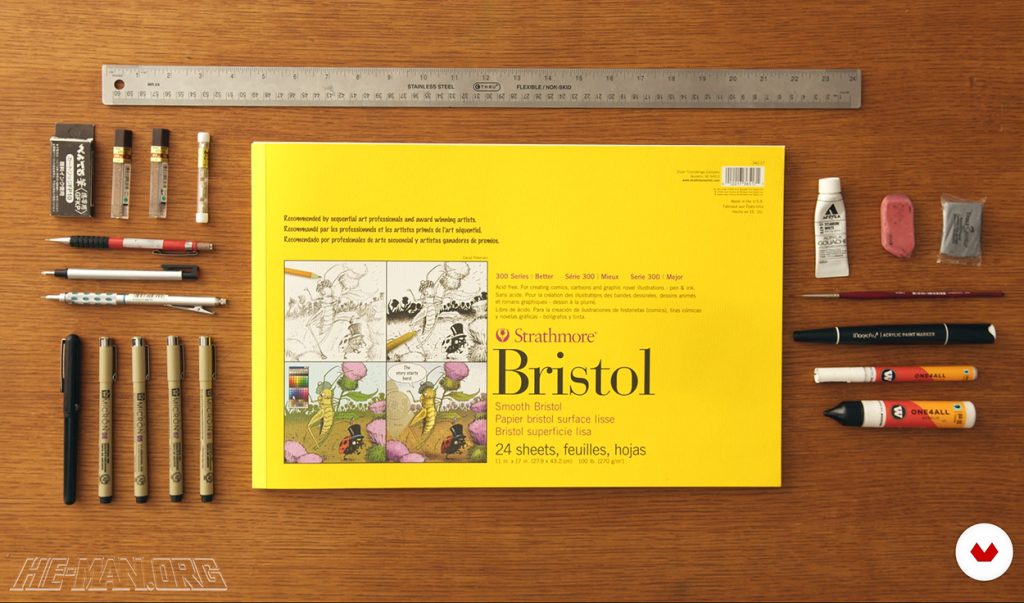
**Jukka’s note – the materials Mr. Brown uses with his work include:
• 11 x 17” Strathmore Bristol Smooth Paper
• Pencil (mechanical pencil 0.3 mm; occasionally 0.9 mm for thicker lines)
• Pen (Micron; 0.3 or 0.5 mm; 0.8 mm for thicker lines and 0.1 mm for fine detailed lines)
• Brush (Pentel Pocket Brush Pen)
• Eraser (a gummy kneaded eraser and a more solid Pink Pearl)
• White paint
• Metallic Ruler
• Triangle
• Curves
• Light board (Huion)
• Comic template
You’re joining Dark Horse’s newly announced ongoing MOTU series beginning with issue #5 and a new story arc starting in March 2026. Dark Horse has traditionally published MOTU in four-issue miniseries, do you know if the upcoming arcs will follow that pattern, or could we see longer story arcs this time?
Now that we have an ongoing series rather than mini-series, we could potentially have freedom to play around with stories of different lengths. It’s exciting!
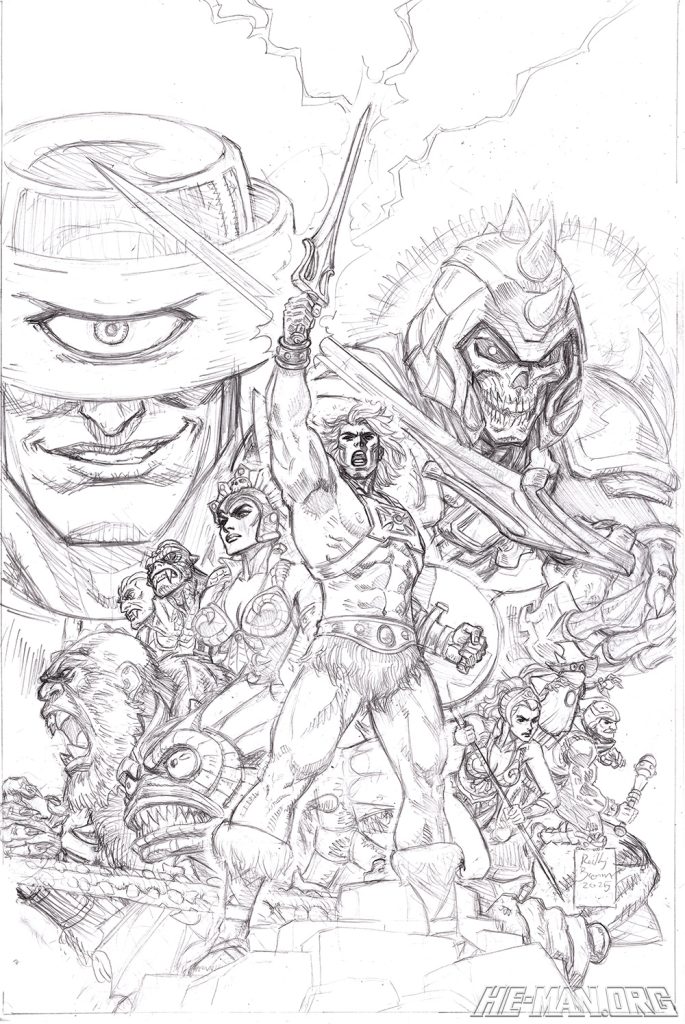
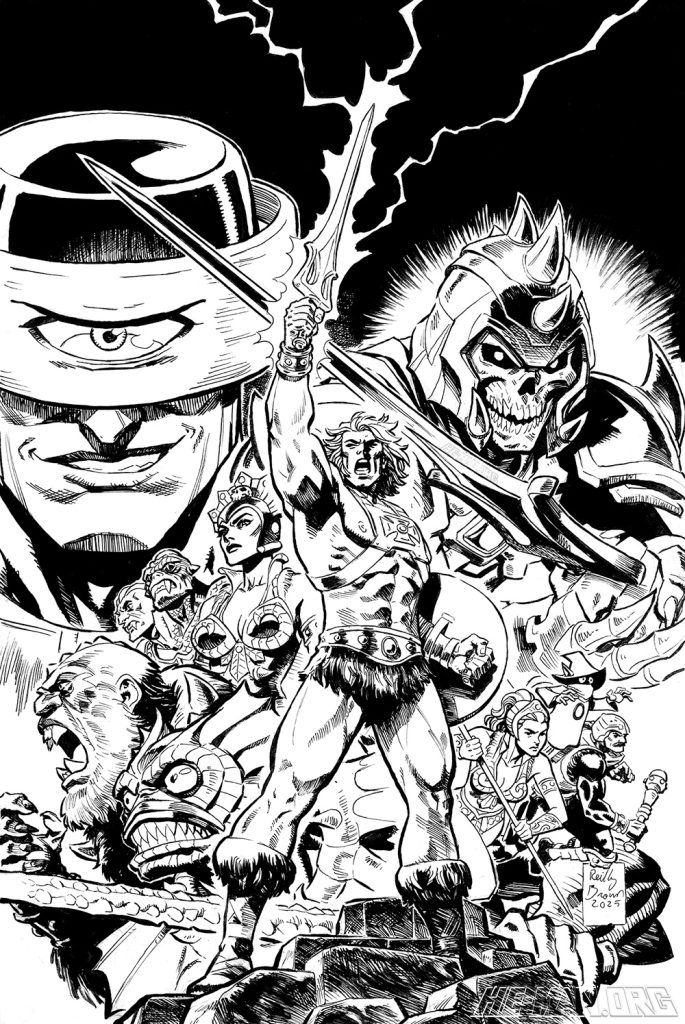
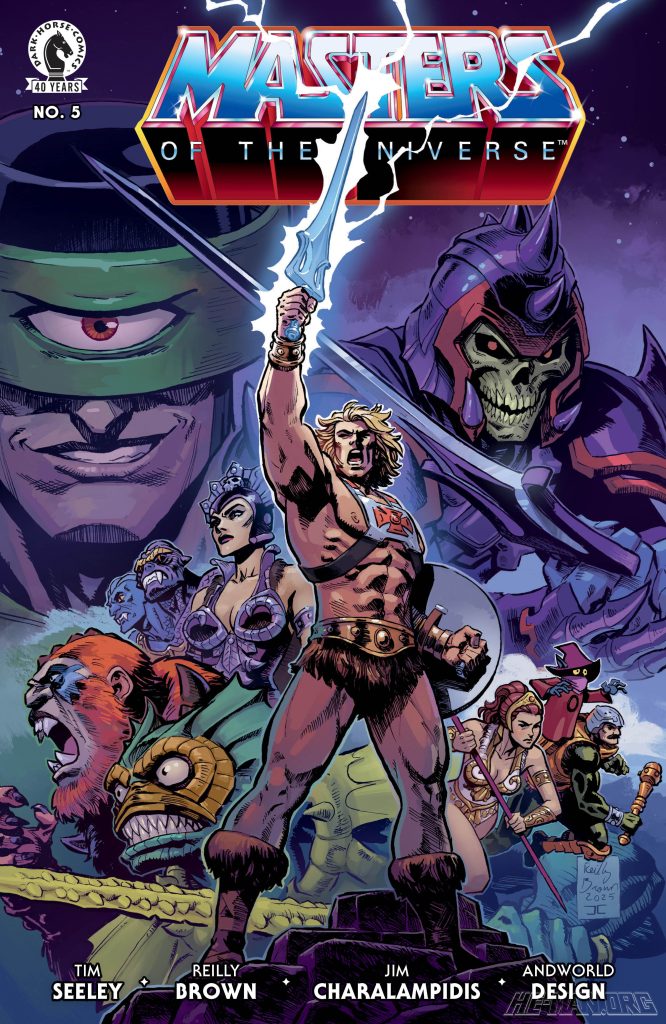
Exclusive Cover process for Dark Horse’s Masters of the Universe #5. Art by Reilly Brown – Color by Jim Charalampidis.
You’re collaborating with Tim Seeley, who’s done a lot of MOTU comics in recent years. What’s it like working with him?
Tim’s great. We’ve known each other for years, so it’s great to have the excuse to get together just to talk about He-Man.
Seeley has talked with He-Man.org’s Colt Crane a bit about how he sees that the current story that started with the “Sword of Flaws”, to be set in the same “continuity” as his previous Thundercats crossover, Injustice crossover and Turtles of Grayskull. A sort of “default classic” Universe where all MOTU lore is on the table. Can you tell us a bit what does that mean and what can we expect?
Tim and I are both big fans of the comics from the 80s, so we’ve been digging back into those – pulling out old character traits, and plot lines that haven’t really been touched on in a long time, or ever, and seeing what we can bring forward. We want to really build on what the people who have come before us have done.
Is there a certain “canon” in MOTU that you personally prefer?
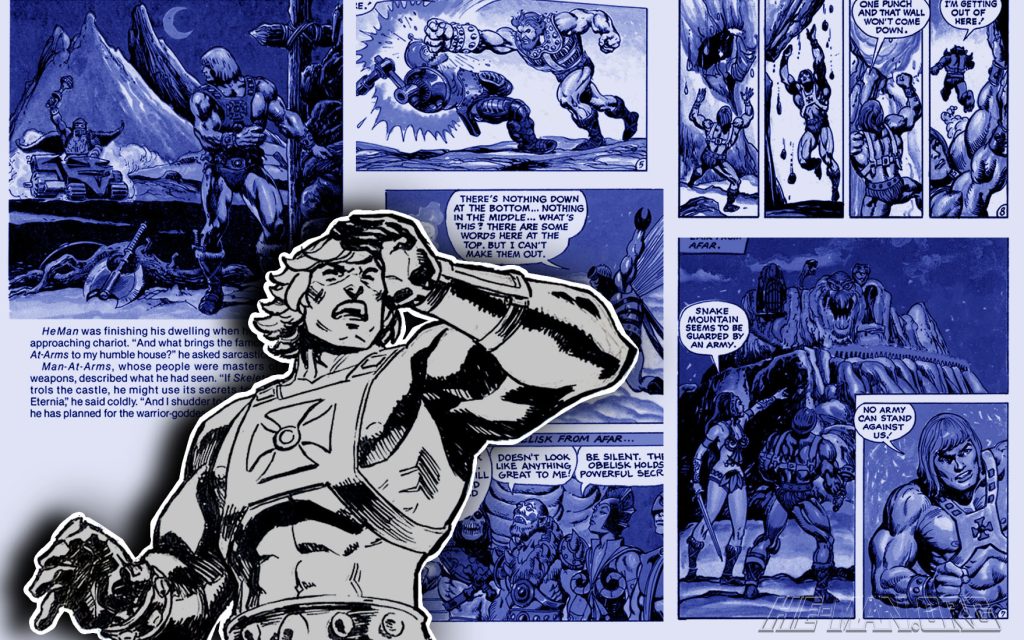
There are so many versions and they’ve all contributed something lasting to franchise, so it can be hard to pick! That said, I will always have a soft spot for those early mini comics from the 80s, when we were first meeting the characters, and Eternia felt so full of mystery and danger. I find myself looking at a lot of Alfredo Alcala art for reference.
I spoke with you earlier about how I sometimes see artists make He-Man’s ears awkwardly pop out underneath his hair – when they are covered most of the time. Will you promise to keep his traditional hairstyle that covers them up?
I know you have strong opinions about He-Man’s ears, Jukka, but worry not, I’ll be giving him that early 80s long feathered hair that we all know and love, as opposed to the business casual do of the ’89 series, or the 200x power mullet.
That said, I reserve the right to sneak a lobe in here and there.
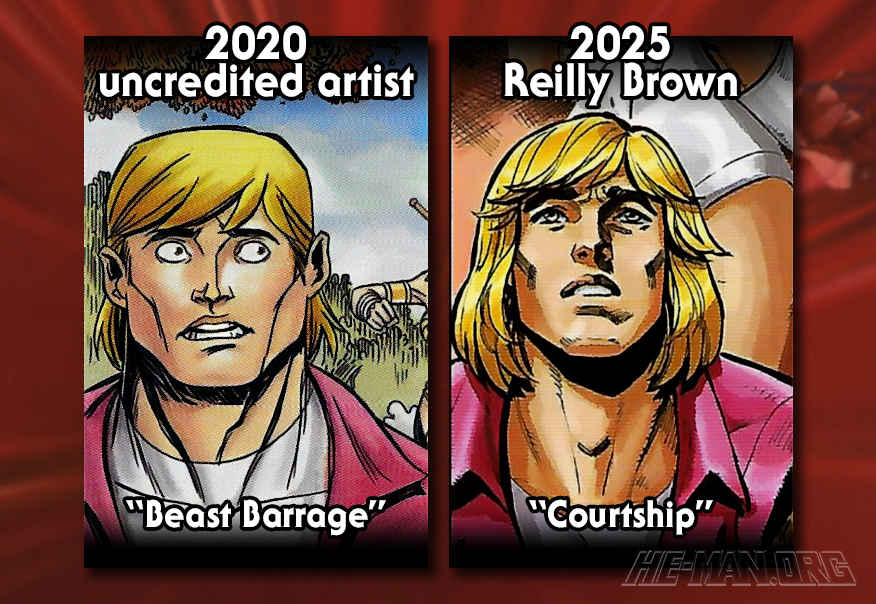
Left side – comic panel from 2020 MOTU Origins “Beast Barrage” mini-comic [uncredited artist]. Right side – panel from 2025 MOTU Origins “Courtship” mini-comic [art by Reilly Brown].
Who is your favorite MOTU character in general, and is there one that stands out to you in the upcoming “The Battle of Snake Mountain” storyarc?
There are so many great ones to choose from! My gut reaction is to say He-Man, I think, so let’s go with him, although Skeletor is so awesome and icon as well, and I love how much he just loves being evil.
In our series, I’d keep an eye on Tri-Klops. We’re doing some really fun things with him that’ll open up some new storytelling possibilities.
There is the live-action MOTU movie coming out June 5th, 2026. What are your feelings about that?
I am excited! Fingers crossed it turns out great! As long as we see He-Man riding on Battle Cat, I’ll be happy.
Are there some MOTU projects that you’d like to work on in the future, that you haven’t been involved in yet?
Every time I hear about a new Masters of the Universe project, I get jealous that I’m not working on it, so I guess the answer is “all of them.” I’m certainly happy working on the comics at the moment, so we’ll see how far this takes me, figure out future projects as the opportunities arise.
You also have a comic book course over at Domestika, where you teach compelling visual storytelling in comics. Can you please tell us more about it?
That’s right, I’ve got a class over at Domestika. For the class, I take people through the creation of a comic, starting with character designs, and ending up with a two fully drawn pages.
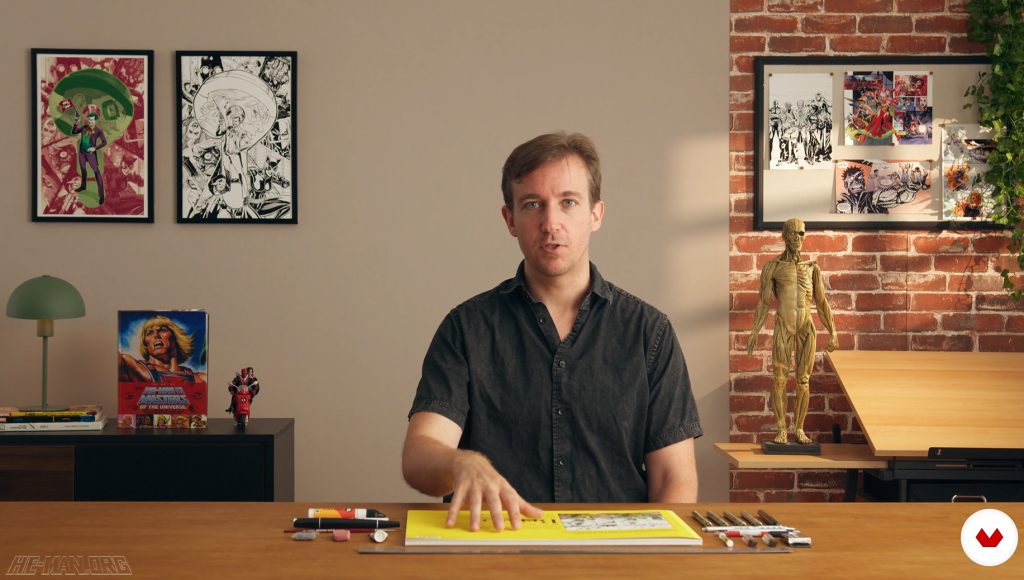
I really focus on storytelling and action, and wanted to take people a bit further beyond the usual Comics 101 classes that you see out there. So if you’re looking to improve your comic-drawing skills, I highly recommend it!
Also, Domestika is always running crazy deals, so check it out and maybe you can get it for a discount.
Thank you very much for this exclusive Interview!
Thank you, Jukka!